Thursday, January 29, 2009

By Knowing this Mother We Will Truly Know the Son


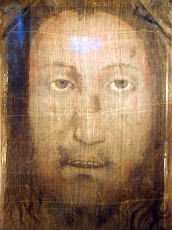
It is a fact of history that the image of Our Lady of Guadalupe which appeared on the tilma of St. Juan Diego in 1531 came into existence at the very time that the Veronica image in Rome came to be hidden from the eyes of the world. It seems that Mary herself wished to in some way compensate for this great loss. What was Europe's loss became America's gain. At least eight million people in Mexico entered the Church founded by her Son Jesus Christ as a result of Mary's loving gesture for our memory. We have a chance to compare the image of the Holy Face of Manoppello with that of Our Lady of Guadalupe. What wonders will we learn??!! First let's read the book by Paul Badde on Our Lady of Guadalupe. It can be ordered from Amazon.com or directly from Ignatius Press www.ignatius.com. I urge you to get it.

In the Face of Jesus the Face of Every One


Words of great depth and experience delivered by Pope Benedict XVI at his Weekly Audience in Rome yesterday. May they reach down into the heart and soul of each and all.

"In these days in which we remember the Shoah, my memory turns to the images taken in during my repeated visits to Auschwitz, one of the concentration camps in which was carried out the brutal massacre of millions of Jews, innocent victims of a blind racial and religious hate. As I renew with affection the expression of my total and indisputable solidarity with our brother recipients of the First Covenant, I hope that the memory of the Shoah moves humanity to reflect on the unpredictable power of evil when it conquers the human heart.

May the Shoah be for everyone a warning against forgetting, against negating or reductionism, because violence committed against even one human being is violence against all. No man is an island, a well-known poet has written. May the Shoah teach especially, as much the old generations as the new ones, that only the tiring path of listening and dialogue, of love and pardon, leads peoples, cultures and religions of the world to the desired encounter of fraternity and peace in the world. May violence never again humiliate the dignity of man!"

Wednesday, January 28, 2009

California Exhibit of Paul Badde's Photographs of Holy Face of Manoppello


At 4PM on December 31, 2008 Fr. Lawrence Goode, Pastor of St. Francis of Assisi Church in East Palo Alto, California, inauguarated an exhibit of photographs of the Holy Face of Manoppello taken by Paul Badde. There are accompanying articles explaining the Holy Face in English and Spanish taken from the official website of the Shrine of the Holy Face in Manoppello: www.voltosanto.it. The exhibit is situated just to the right of the Main Altar of the church adjacent to the Baptismal font and to the statue of St. Joseph. In the photograph can be seen Fr. Goode together with the parishioner Placida Nava who had just returned from a pilgrimage to the Holy Land. The Church of St. Francis of Assisi is close to Highway 101 at 1425 Bay Road, just about half way between the cities of San Francisco and San Jose. The pastor hopes that the exhibit of the Holy Face will be a source of hope, inspiration and prayer for the many people who attend this church whose lives are often difficult.

Tuesday, January 20, 2009

One Year Retrospective

With great thanks to the two people who are most responsible for making this blog possible: Fr. Carmine Cucinelli, O.F.M., Cap. and Paul Badde I dedicate this link of the photos which have been posted in the past year on this blog. Please paste this link on your browser to see a slide show of the Holy Face of Manoppello as well as other related photos, the great majority of which have come either by the kindess of Father Carmine or Paul. www.picasaweb.google.com/randlfrost/holyfaceofmanoppello

Saturday, December 27, 2008

God Has Revealed His Face Alleluia

Pope Benedict's Homily at Christmas Midnite Mass and his Christmas Day Message speak wonderfully of God revealing his face in Jesus Christ. His words which struck me the most: The One who has no equal, who "is seated on high", looks down upon us. He stoops down. He sees us, and he sees me. God's looking down is much more than simply seeing from above. God's looking is active. The fact that he sees me, that he looks at me, transforms me and the world around me.May this realization spread like a blazing fire around the world! May the words of Pope Benedict be implanted in the mind, memory and will of all peoples, especially those most in need, to the greater glory of God.

Excerpts From Pope Benedict's Christmas Message 2008

Dear brothers and sisters, in the words of the Apostle Paul, I once more joyfully proclaim Christ's Birth. Today "the grace of God our Saviour" has truly "appeared to all"!

It appeared! This is what the Church celebrates today. The grace of God, rich in goodness and love, is no longer hidden. It "appeared", it was manifested in the flesh, it showed its face. Where? In Bethlehem. When? Under Caesar Augustus, during the first census, which the Evangelist Luke also mentions. And who is the One who reveals it? A newborn Child, the Son of the Virgin Mary. In him the grace of God our Saviour has appeared. And so that Child is called Jehoshua, Jesus, which means: "God
saves".

The grace of God has appeared to all. Jesus – the face of the "God who saves", did not show himself only for a certain few, but for everyone. Although it is true that in the simple and lowly dwelling of Bethlehem few persons encountered him, still he came for all: Jews and Gentiles, rich and poor, those near and those far away, believers and non-believers… for everyone.

Today too those who await him, who seek him in their lives, encounter the God who out of love became our brother – all those who turn their hearts to him, who yearn to see his face and to contribute to the coming of his Kingdom. Jesus himself would say this in his preaching: these are the poor in spirit; those who mourn, the meek, those who thirst for justice; the merciful, the pure of heart, the peacemakers, and those persecuted for righteousness' sake (cf. Mt 5:3-10). They are the ones who see in Jesus the face of God and then set out again, like the shepherds of Bethlehem, renewed in heart by the joy of his love.

Let us go, then, brothers and sisters! Let us make haste, like the shepherds on that Bethlehem night. God has come to meet us; he has shown us his face, full of grace and mercy! May his coming to us not be in vain! Let us seek Jesus, let us be drawn to his light which dispels sadness and fear from every human heart. Let us draw near to him with confidence, and bow down in humility to adore him. Merry Christmas to all!


From Pope Benedict's Christmas Midnight Mass Homily 2008

God is infinitely great, and far, far above us. This is our first experience of him. The distance seems infinite. The Creator of the universe, the one who guides all things, is very far from us: or so he seems at the beginning. But then comes
the surprising realization: The One who has no equal, who "is seated on high", looks down upon us. He stoops down. He sees us, and he sees me. God's looking down is much more than simply seeing from above. God's looking is active. The fact that he sees me, that he looks at me, transforms me and the world around me. The Psalm tells us this in the following verse: "He raises the poor from the dust." In looking down, he raises me up, he takes me gently by the hand and helps me to rise from depths towards the heights. "God stoops down". This is a prophetic word. That night in Bethlehem, it took on a completely new meaning. God's stooping down became real in a way previously inconceivable. He stoops down: he himself comes down as a child to the lowly stable, the symbol of all humanity's neediness and forsakenness. God truly comes down. He becomes a child and puts himself in the state of complete dependence typical of a newborn child. The Creator who holds all things in his hands, on whom we all depend, makes himself small and in need of human love. God is in the stable. In the Old Testament the Temple was considered almost as God's footstool; the sacred ark was the place in which he was mysteriously present in the midst of men and women. Above the temple, hidden, stood the cloud of God's glory. Now it stands above the stable. God is in the cloud of the poverty of a homeless child: an impenetrable cloud, and yet a cloud of glory!


Some day soon may all peoples come to find hope and guidance for the future by the vision which Jesus Christ has willed of His awesome Holy Face in the hidden to the world town of Manoppello.

Wednesday, December 3, 2008

Our Lady of Guadalupe the Image of the Mother of God


the photo above shows the Guadalupe altar at St. Ignatius Church in San Francisco. This altar was dedicated December 12, 1999 by the Pastor, Rev. Charles Gagan, S.J. in honor of Our Lady of Guadalupe, asking her help and intercession in the New Millennium.

I thank Br. Samaha for allowing me to post this article in preparation for the Feast of Our Lady of Guadalupe on December 12. Br. Samaha is a member of the Society of Mary (Marianists), an educator, administrator and author who has done much to foster devotion to Mary throughout the United States and around the world. By learning about the Image of Our Lady of Guadalupe we will learn much about the Image of the Holy Face of Manoppello, and vice versa, for they are the Images not made by human hands ("acheropite") of the Mother of God and her Son Our Lord Jesus Christ.

THE IMAGE OF OUR LADY OF GUADALUPE

Icon of the Church in the Americas


Brother John M. Samaha, S.M.


With her head tilted to the right, her hazel eyes are cast downward in an expression of gentleness and concern. The mantle covering her head and shoulders is turquoise, studded with gold stars and bordered in gold. Her hair is jet black and her complexion is olive. She stands alone, her hands clasped in prayer, an angel at her feet.

We have all seen her image. She is Our Lady of Guadalupe, a life-sized portrayal of the Virgin Mary as she appeared in 1531 on the cactus-cloth tilma, or cape, of St. Juan Diego, an Aztec peasant and devout convert. This happened merely a dozen years after Hernan Cortes had conquered the land that is now Mexico for the monarchy of Spain. Almost five centuries later the colors of that portrait have remained as vibrant as if painted this year. The coarse, woven, cactus cloth shows no signs of fading or deterioration, although that type of material seldom lasts 20 years.

Today the image is preserved behind an impenetrable glass screen in the basilica at Mexico City. Pilgrims can view it from a distance of 25 feet. Each year more than 10 million persons venerate the mysterious image of the Virgin of Guadalupe, making this shrine the most popular in the Catholic world after St. Peter’s Basilica at Vatican City. The Mexican faithful refer to her lovingly as La Morenita.

In 1979 when Pope John Paul II visited the Basilica of Our Lady of Guadalupe, he acknowledged the enduring appeal of this unique portrait, addressing the Virgin directly: “When the first missionaries who reached America . . . taught the rudiments of the Christian faith, they also taught love for you, the Mother of Jesus and of all people. And ever since the time that the Indian Juan Diego spoke of the sweet Lady of Tepeyac, you, Mother of Guadalupe, have entered decisively into the Christian life of the people of Mexico.”

Accounts abound of the miraculous events attributed to the Virgin of Guadalupe. In the early 17th century when floods almost destroyed Mexico City, her image escaped unharmed. In 1921 during the Mexican Revolution, a bomb was planted in flowers placed before the altar behind which the image hung. When the bomb exploded, no one was hurt, but the altar was badly damaged. Yet not even the glass covering the picture was broken.

This venerable icon has come to be regarded widely as the national symbol of Mexico. Her image is found everywhere, even in unlikely places.

Forty years after La Morenita appeared to St. Juan Diego, she may have been responsible for a significant turning point in the history of Western civilization. Throughout Europe copies of the holy image had been circulated. One of the first copies was given to Admiral Giovanni Andrea Doria, grandnephew of the renowned Admiral Andrea Doria. The young admiral took the picture aboard his flagship when he assumed command of a flotilla of ships sailing from Genoa to the Gulf of Lepanto.
Some 300 Turkish Muslim ships stood in battle array blocking entrance to the Gulf. A Christian massed navy of almost the same number of ships attempted to meet the Turks head on, but were outmaneuvered by the Turkish force.

Doria’s squadron was cut off from the rest of the Christian fleet. At this crucial hour Doria went to his cabin and knelt in prayer before the image of Our Lady of Guadalupe. He implored her to save his men and his ships. Miraculously by nightfall the tide of battle turned. One Turkish squadron was captured, and others were thrown into panic and disarray. Much of the Turkish fleet was destroyed. That day 15,000 Christians enslaved in the Turks’ galleys were freed. The Christian victory in the Battle of Lepanto was the last great naval battle fought under oars.

To this day Our Lady of Guadalupe continues to work wonders large and small, noticed and unnoticed.

Why hasn’t the holy image deteriorated after almost five centuries? Why do the colors remain bright? Why hasn’t the crude fabric shown signs of disintegration? The search for answers to these questions, regularly pursued by experts, persist from generation to generation. What they have learned is fascinating. However, the scientific investigations defy natural explanations.

Although the picture has been touched up from time to time, there is proof that the original image is made in a manner no artist has been able to imitate or to explain. Of particular interest is the fact that the eyes of the Virgin are done in a way never seen before in any painting.

Yet the greater, ongoing miracle is how the lives of millions are touched by Our Mother of Guadalupe.

Tuesday, December 2, 2008

Jesus Christ Revealed in Word and Sacrament


In one of the first talks given as Pope, John Paul II proclaimed "throw open wide the doors to Jesus Christ" to encourage us to live in Christ. Down through the centuries, many great accomplishments of European culture have come about because of this openness to Jesus Christ. This "still-life" is an example of early Renaissance culture from Germany which reveals something about the Holy Face of Manoppello, Jesus Christ, and his influence on the development of artistic expression flowing from faith in Him and in what He has revealed "in pictura et scriptura" and Holy Sacrament.

The work of art shown here is a detail from a Gregory Altar from the Lorenzkirche in Nuremberg, painted by Michael Wolgemut the teacher of Albrecht Durer. I warmly thank Mrs. Hildegard Schuhmann for allowing me to post here this photograph she has taken, and Paul Badde for bringing it to my attention.

As I look at these works of art I see the unity of Word and Sacrament proclaiming Christ yesterday, today and forever.