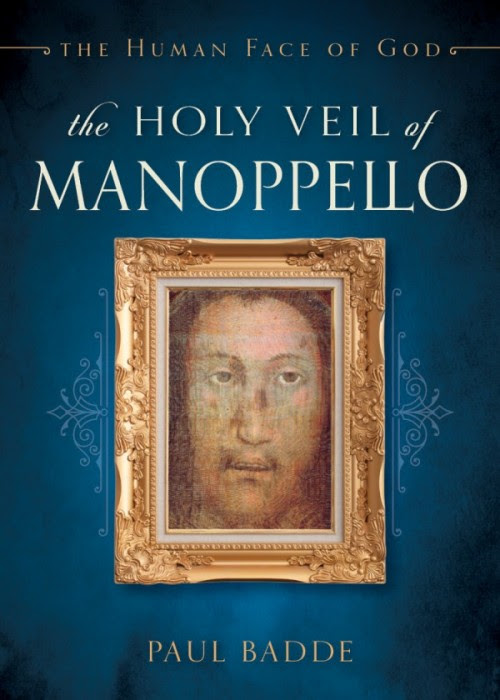
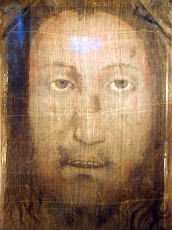
Sunday, January 20, 2019

Homily by Cardinal Gerhard Ludwig Müller for Omnis Terra Sunday 2019 at the Basilica of the Holy Face of Manoppello


Translation

N.B.: Scripture quotes as per RSV-Catholic (http://www.ewtn.com/devotionals/biblesearch.asp)
Homily by Cardinal Gerhard Ludwig Müller
Manoppello, 20 January 2019


In Jesus' farewell speeches before his Passion, Jesus provides the Apostle Philip with an answer that brings us to the very center of our Faith. After Jesus had said: "If you had known me, you would have known my Father also; henceforth you know him and have seen him." (John 14:7), Philip wonders how one might be able to see God, "who alone has immortality and dwells in unapproachable light, whom no man has ever seen or can see" (1 Timothy 6:16). Jesus answers him: "He who has seen me has seen the Father."


When we are thus face to face with Jesus, person to person, and gaze upon his human face, then we see in Jesus' eyes the benevolent, discerning, judging and saving power of love, which is God in the unity and communion of Father, Son and Holy Spirit. We see Jesus with our physical eyes and recognize his divine nature and power with the "the eyes of [our] hearts enlightened," (Ephesians 1:18). In the divine person of the Son of the Father, Christ's eternal divine nature and his adopted human nature are united. Only through Jesus do we come to the Father, because He alone bridges the infinite distance of the creature to the Creator. "There is one mediator between God and men, the man Christ Jesus." (1 Timothy 2:5) He is the universal, divine plan of salvation made flesh, "who desires all men to be saved and to come to the knowledge of the truth" (1 Timothy 2:4). Jesus, in his human nature, is "the way" by which "the truth, and the life" (John 14:6) were brought into this world.
The Apostle Paul calls the human nature of Christ, through which we recognize God's glory and from which we are fulfilled, the "likeness of God" – imago Dei (2 Corinthians 4:4). It is not an image of God conceived in a finite mind and made by man.
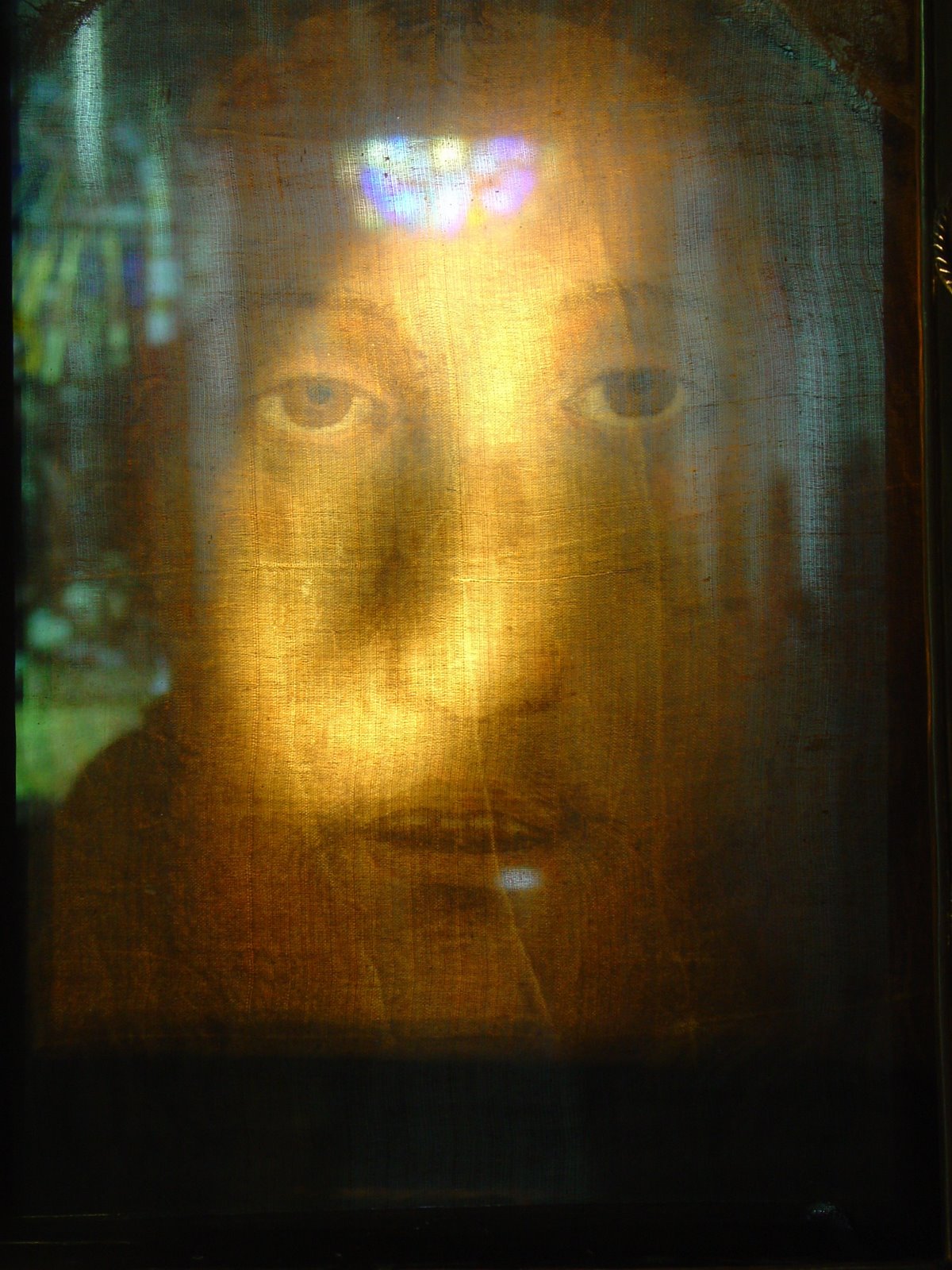
photo by Paul Badde

Even before the incarnation of the Word, the Son in the Triune God is the image of the being of God the Father, in the Greek words of the New Testament: "the character of his Hypostasis" (Heb 1:1). Christ is true God of true God. In the darkness of sin, which "blinded the minds of unbelievers" (2 Corinthians 4:4), God has let his light shine in the hearts of believers, "to give the light of the knowledge of the glory of God in the face of Christ" (2 Corinthians 4:6).
He, who through his word brought forth all creation, becomes a man like us, "tempted as we are, yet without sin" (Hebrews 4:15), which is what He came to deliver us from. "Since therefore the children share in flesh and blood, he himself likewise partook of the same nature, that through death he might destroy him who has the power of death, that is, the devil, and deliver all those who through fear of death were subject to lifelong bondage. (Hebrews 2:14f).

photo by Paul Badde

We recognize this when we look Jesus in the eye and offer ourselves to His look at us without malice. God surrounds us with his infinite mercy and in his love he goes so far as not only to die for us, but to die our death. He bore the debt of our sins until death on the cross and even took them to his grave. Death no longer has any power over Jesus and us, who form one body with Christ. And this is the creed of the Church, which Paul delivered to the Corinthians as he himself received it: "Christ died for our sins in accordance with the scriptures, that he was buried, that he was raised on the third day in accordance with the scriptures, and that he appeared to Cephas, then to the twelve". (1 Cor 15:3-5).
The Gospel of John tells of the discovery of the empty tomb. When Mary of Magdala came to the tomb early in the morning, she saw that the stone in front of the burial chamber had been taken away. And because she feared that the body had been taken away, she brought Peter and the other disciple there. Peter went first into the tomb and "he saw the linen cloths lying, and the napkin, which had been on his head, not lying with the linen cloths but rolled up in a place by itself" (John 20:6f). Peter, then, is the first witness of the empty tomb. In the apparitions of the Risen One, it is Jesus who gives him and the other apostles proof that he lives with God and that he has returned to his Father. But he has not discarded his human nature, rather living with his glorified body forever as the Word made flesh in communion with the Father and the Holy Spirit. He is the head of the body that is the Church. Through Him, as children of God, we have access to the Father and may expect the inheritance of eternal life. And the exalted Lord remains with us with his Gospels and encounters us in the sacraments of his grace. Especially in the Most Holy Eucharist he takes us into the mystery of his dedication to the Father. In Holy Communion we receive communion with Him in His flesh and blood as food and drink for eternal life.


St. John Chrysostom and St. Augustine, in their comments on the Gospel of John, asked themselves why the evangelist, when discovering the empty tomb, described these trivialities, such as the linen bandages and the folded sudarium, in such detail. They were convinced, however, that the evangelist would not communicate anything in a manner so intricate if it were unimportant for our Faith.
When Jesus raised his friend Lazarus from the dead, the stone is rolled away from the outside of the burial cave. Jesus calls him out. When the deceased comes out, his feet and hands are still wrapped in bandages and his face is covered with a sudarium. But everything must be removed from him, because he cannot free himself from the bandages of death (John 11:44).
Jesus, who says of himself, "I am the life (John 14:6), rises from the dead with the power of God Himself. The stone before the tomb was taken away before the women came to the tomb. Jesus does not need to be freed from the bonds of death, because he has overcome his and our death by his own divine power.
St. Thomas Aquinas recognizes in his commentary on John a reference to the church in the relationship of the many bandages to the one sudarium "which had been on his head" (John 20:7), rolled up in a place by itself. In the Godhead united with his human nature, Christ is the head of the Church, for "the head of Christ is God" (1 Corinthians 11:3).
In Jesus Christ the goodness and loving kindness of God our Savior has appeared and shone in this world (Titus 3:3f). In his face he looks at us and wants us to respond with the love within our heart. By believing we do not adopt a theory to explain the world. The Gospels are not abstract ideas or values clothed in beautiful stories. God really became man and stays with us. Jesus is an historic person. His resurrection from the dead really did happen. He has not risen into Faith but is recognized in our faith as the living Christ, the Son at the right hand of the Father. For no one can say, "Jesus is Lord except by the Holy Spirit" (1 Corinthians 12:3).
If the historical, sacramental and ecclesial presence of the Son made man is decisive for our salvation, it is not unimportant that we also seek out His historical traces. They save us from the danger of a Gnostic and idealistic evaporation of God's human presence in this world. Without entering into scientific debates, the encounter with Christ in the imprint of His face on the Manoppello Sudarium seems to me to be of great importance for the piety of today's Christian. The uneven history of its rediscovery has come to a good end, arriving at the point of deep veneration and adoration of Jesus Christ, who as a man is the image of God, his Father and our Father in heaven.

photo by Paul Badde

Much remains hidden from the wise and prudent, that God however does reveal to lesser minds in the humility of Faith. Gazing into the most holy face of Jesus, as it was traced into the sudarium on his head, should give us new strength that our life may hold true in the eyes of God. For we believe and know that we will one day see God through and in Christ, the image of God, "face to face" (1 Corinthians 13:12).

Friday, January 18, 2019

Live Streaming on YouTube This Sunday January 20 of the Feast of Omnis Terra from the Shrine of the Holy Face of Manoppello


Photo by Paul Badde


Antonio Bini has just let me know that, on the initiative of the Shrine, there will be Live Streaming from the Shrine of the Holy Face on You Tube of the Feast of Omnis Terra this Sunday January 20.  The ceremony starts at 11am, Italian time, 6am on the East Coast of the USA and 3am on the West Coast. 


 Also, here is a video on the Holy Face shared with me by Paul Badde, which was just produced last week by Catholic News Service, the news service of the American Catholic bishops:  The video includes commentary by Fr. Carmine Cucinelli, Fr. Paolo Palombarini, Antonio Bini and Paul Badde.

https://youtu.be/4qCNO1JzV_M


Shrine of Holy Face of Manoppello January 3, 2019 (Photo by Brian Alves)

Sunday, January 6, 2019

In Two Weeks Omnis Terra Sunday to Be Celebrated at the Basilica of the Holy Face of Manoppello


Official announcement from the Basilica of the Holy Face of Manoppello with translation following


Basilica of the Holy Face – Manoppello
                                                        
                                              Omnis Terra

On the second Sunday after Epiphany, known as Omnis Terra Sunday
Pope Innocent III in 1208 led a procession at Rome with the Holy Face from St. Peter’s Basilica to the Church of Santo Spirito di Sassia.  We recall this procession with the following program:

Sunday January 20, 2019

11am:  Holy Mass presided by His Eminence Cardinal Gerhard Ludwig Müller  , Prefect Emeritus of the Congregation for the Doctrine of the Faith, together with Most Reverend Salvatore Cordileone, Archbishop of San Francisco, California, USA and with Most Reverend Bruno Forte, Archbishop of Chieti-Vasto, Italy

At the conclusion of the Mass there follows inside the Basilica a Procession and blessing with the Monstrance of the Holy Face

Thursday, January 3, 2019

The Sudarium of Jesus on the Outskirts of Rome


article adapted from longer article which appeared in the November 2018 edition of Il Volto Santo di Manoppello the official publication of the Shrine of the Holy Face of Manoppello.  Additional text and photos are included in this posting.  Unless otherwise credited the photos are courtesy of Mrs. Daisy Neves.

At Rome, beyond the large modern freeway known as the Gran Raccordo Anulare which circles Rome, and just before the Prima Porta, in the Valle Muricana neighborhood, is the modern church and parish dedicated to Saints Elizabeth and Zechariah. The pastor Fr. Bonifacio Lopez, originally from the Philippines, is assisted by two priests. The parish territory is vast and numbers approximately 16,000 inhabitants. In May 2013 Pope Francis chose this parish as the first one to visit after his election. On that day he celebrated Holy Mass during which 40 children received their First Holy Communion. It was a huge celebration throughout the neighborhood!
Church of St. Elizabeth and Zechariah

Fr Bonifacio, or Fr. Ted to his friends, accompanied Capuchin Father Carmine Cucinelli, rector of the Shrine of the Holy Face of Manoppello, in 2015 during the Holy Face Mission to Canada, the United States and the Philippines, acting as his interpreter. Impressed by the enthusiasm of the faithful for the veneration of this image, he expressed a desire: "If I become a pastor , I propose to enthrone the Holy Face in my parish church ". Last year, in September 2017, the moment arrived. He was named pastor and wanted to keep his promise.
His new parish church's adoration chapel and stained glass windows still needed to be completed. In the central window, above the entrance portal, within the shape of a cross, Fr. Ted instructed artists to place the image of the Holy Face at the cross of the two arms, so that the faithful could better understand the meaning of the cross, where Christ has, yes, died, but then is also Risen. He is alive! And we are filled with joy.


Fr. Bonifacio "Ted" Lopez

Thus at the end of September, the Holy Face was imprinted on the glass and positioned in the plain sight of all. But Fr. Bonifacio also wanted the Face of Jesus of Manoppello to be contemplated from close up. Which place would be the most suitable? Given that a new tabernacle was to be placed in the chapel for the adoration of the Blessed Sacrament, he thought of placing it there above the tabernacle. The faithful who go to the chapel to adore the Eucharistic Jesus, gazing upon
the Holy Face, could thus be helped to also contemplate the human features of Jesus and make this adoration even more fruitful.

The Holy Face in the Adoration Chapel 

The proposal had the favorable opinion of his associates
and the date was set
for the enthronement: Sunday October 14, 2018. A copy of the sacred Image, provided and blessed by Fr. Carmine the rector of the shrine of Manoppello, beautifully framed, was ready to be permanently displayed for public veneration.
Fr. Carmine at the altar with Fr. Bonficacio displaying the Holy Face

Father Carmine, rector of the shrine of the Holy Face of Manoppello presided over the celebration, with the parish pastor Fr. Bonifacio, and a host of ministers both great and small. The parish choir led the singing.

Courtesy of Il Volto Santo di Manoppello

First of all, the new Tabernacle was blessed and during the Mass a baby girl received the sacrament of baptism.

In the homily Fr. Carmine traced the story of the arrival of the Holy Face in Manoppello, following an itinerary that began at the tomb of Jerusalem, continuing to present day Turkey, then to Rome and finally Manoppello. More and more in recent years the hypothesis has come to be accepted that the Holy Veil can be identified with the Sudarium from the tomb of Jesus, of which the Gospel of John speaks: "As soon as John saw the sudarium which had been placed on the face of Jesus rolled up in a separate place, he believed in the Resurrection of Jesus".


Fr. Carmine delivering the homily (Courtesy of Il Volto Santo di Manoppello)


In 1527 after the sack of Rome a pilgrim brought the precious Relic to Manoppello in order to safeguard it from the hands of the ravaging invaders of Rome, entrusting it to a local Doctor who jealously guarded it in his care. Later it fell into the hands of a soldier who kept it for ten years. When he ended up in prison, his wife, in order to free him, sold the Holy Veil to a noble pharmacist who kept it lovingly for 20 years and wished to spread devotion to the Holy Face. Thinking that this would be difficult for him he gave it to the Capuchin friars, who had recently constructed a friary in the hills above the town, so that they might make the holy Image known to everyone. The friars since that time have promoted the sacred image through their preaching and through reproductions in the early years first with drawings, then with prints and more recently with photography and through television. In 1999 a Jesuit priest, professor of art history at the Gregorian University, Henrich Pfeiffer, announced to the international press: "The Roman Veronica has been found in Manoppello". This news caused thousands of people to flock to Manoppello: among them the faithful, journalists, scholars, the curious, bishops, cardinals and, in 2006, even Pope Benedict XVI himself. Studies and research also began. the Holy Veil was compared with the Shroud of Turin and when photos of each were superimposed on each other they revealed the same person. 1500 years ago this cloth was called an "acheropita", that is "not made by human hands". A mystery appears to us, to which it is good to inquire, not with curiosity, but with faith, that is to go beyond the image, to the Person whom this image represents, Jesus. Finally, the celebrant invited us to make an effort, to impress the face of Jesus in our hearts so as to show it to others by our good example.

The Mass continued with solemnity, with singing and with the offering of the gifts. The framed image of the Holy Face was blessed and enthroned in the adjacent chapel. At the end there were also testimonies, given by the artists of the windows and of the Tabernacle and by Mrs. Daisy Neves, of Bellevue (USA) who sponsored the enthronement of the Holy Face coming to this parish.


This was the second image of the Holy Face to be enthroned recently in a Roman parish. On November 11, 2014 at the church of Sant'Ignazio allo Statuario the pastor Fr. Jess Marano enthroned the Holy Face, the first ceremony of its kind in Rome in many centuries.
Shrine of the Holy Face in the church of Sant'Ignazio allo Statuario in Rome

Monday, December 31, 2018

Blessings for the New Year

St. Francis with the Holy Face by Hans Clement, Nuremberg, 1590 courtesy of Paul Badde


by Paul Badde
Paperback — 112 pages


List price: $12.95 
Today's Sale Price: $10.99!


 https://www.sophiainstitute.com/products/item/holy-veil-of-manoppello

Review  of Paul Badde's most recent book on the Holy Face by K.V. Turley of Catholic Exchange

https://catholicexchange.com/the-mysterious-holy-veil-of-manoppello

Recent interview with Paul Badde in the National Catholic Register conducted by Joseph Pronechen

http://www.ncregister.com/daily-news/authors-quest-to-make-the-holy-veil-of-manoppello-better-known

an excerpt from the interview is shown below

You mention other recent attacks on the Holy Veil coming from various sources, most of whom have not even seen the veil. Your book reveals the absurdity of those who say its devotion is based on an “infantile and old-fashioned” faith. Why might they be doing this? (JP)

As somebody who really should know, Pope Emeritus Benedict XVI told me literally in our last conversation that even “otherwise good theologians” tend to “believe in a grave of Christ that rather has not been empty”; in other words, that they couldn’t believe anymore in the resurrection from the dead as such, which he found “incomprehensible.” I instead find it quite comprehensible, since I know that relics and items of that kind aren’t important for theologians, as many of them tend to see it. Words, words, words are important. Many of them, however, just don’t realize that the Gutenberg Era is over — and that God really became man, not a book; all the Gospels came later, as written theology — and that this is the most unbelievable fact of our Creed, in a challenge to man’s mind unheard of before. But then: It’s easier indeed and more enlightened and “modern” to believe — as Nietzsche did — that God is dead rather than that he’s alive. (PB)

Was Benedict XVI’s visit to Manoppello a turning point in learning about the Sudarium, like a stamp of papal approval on this being the real veil of Christ?

Who on earth will read books and big volumes anyway in 100 years, in digital times, as we cannot imagine them today in the last days of the age of Gutenberg? However, because of the semantics, the syntax and the grammar of images, the image of his silent prayer in front of the Face of God in Manoppello on Sept. 1, 2006, will remain and speak forever louder and louder of his unique pontificate.

In your book you write, “Because the Creator of Heaven and Earth has shown His face not only to Jews and Christians, but to the whole world, the translucent image of Christ on that thin cloth will change the world and the course of history in a way that today no man can imagine.” How have you seen it change already?

Could you have imagined the changes the introduction of the first iPhone on June 29, 2007, has triggered in society? Nobody could have imagined these immense changes! The digital revolution is the challenge the world and the Church are facing, and it frightens many old-school scholars. That is exactly the historic context in which this True Icon of the Son of Man reappears in the history of man. He will resist every artificial intelligence as the next great threat to mankind and our freedom.

Tuesday, December 18, 2018

Holy Face at Center of Catholic Cultural Event "Week of Beauty" in Diocese of Grosseto (Tuscany)


Bishop Rodolfo Cetoloni at the front door of the Cathedral blessing the faithful with the replica of the Holy Face

Photos from the Facebook page of the Shrine of the Holy Face of Manoppello https://www.facebook.com/basilicavoltosanto/posts/1032342873617614

Cardinal Tagle and Bishop Cetoloni at Week of Beauty
https://www.facebook.com/basilicavoltosanto/posts/1029713130547255

https://www.facebook.com/basilicavoltosanto/posts/1029701493881752


Text translated and adapted from articles by Giacomo D'Onofrio from the Diocese of Grosseto newspaper "Rinnovamento" 

and from articles whose links are found at

https://agensir.it/quotidiano/2018/10/13/diocesi-grosseto-la-terza-edizione-della-settimana-della-bellezza/

https://www.ilgiunco.net/2018/10/12/torna-la-settimana-della-bellezza-il-volto-protagonista-della-terza-edizione-tutto-il-programma/


"Look for His face; Your face, Lord, I seek. Do not hide your face"

"The principal desire for this event - stated Msgr. Rodolfo Cetoloni, Bishop of Grosseto - is to take up the invitation that the Pope has repeatedly addressed to Christians: that of wearing new lenses with which to look at the other in front of us, to take a  more welcoming and less suspicious or fearful look, more open to the amazement of the novelty that the other always carries with him. Starting from the contemplation of the face par excellence: that of God. It is a theme that can involve everyone: from children to adults, from believers to those who are far from a personal journey of faith ".

Bishop Cetoloni addressing the faithful gathered in the Cathedral


 As in previous editions, the event of faith and culture was proposed by the diocese of Grosseto through its offices, with the collaboration of the Italian Bishops daily newspaper Avvenire and the monthly magazine of art and culture "The places of the infinite", of the Fondazioni Crocevia and university sectors of Grosseto; co-ordination is entrusted to the Municipality of Grosseto in collaboration with the Grosseto culture Foundation with Clarisse art and the archaeological and religious art museum of the Maremma.

To mark the Week there was a display in the cathedral (starting from 5.30 pm on Saturday October 20) of the reproduction of the Holy Face, a precious relic preserved for centuries in Manoppello which had already been brought to the church of Santo Spirito in Rome in January 2016.


 Guest of honor of this edition of the "Week of Beauty" was Cardinal Luis Antonio Tagle, archbishop of Manila and president of Caritas International. On Monday 22 October, he gave a learned discourse on the theme of the Week.


Wednesday, October 24  Sr. Gloria Riva, art historian and founder of the nuns of Eucharistic adoration spoke.


On Thursday 25th October, on the other hand,  an entire day was dedicated to contemplation and prayer before the Holy Face coinciding with contemplation and prayer at the Shrine of the Holy Face of Manoppello.

Live streaming of the Holy Face from the Shrine of Manoppello during prayer service in Cathedral of Grosseto


At 5pm on that day, in the cathedral, the journalist and writer Saverio Gaeta, editor of the weekly magazine Famiglia Cristiana and author of several books on the Holy Face of Manoppello spoke on"The Enigma of the Face of Jesus".


"Look for His face; Your face, Lord, I seek. Do not hide your face ».

In the days of the "Week of Beauty 2018" many times, those very many who participated in the various moments these words of Psalm 26 were proposed and repeated again and again. The theme of this third edition of the event of faith and culture organized by the Diocese together with the Fondazione Crocevia (Crossroads Foundation) along with the collaboration of many authoritative persons and associations, was in fact: «Your face I seek».


An invocation, which becomes an exploration capable of crossing millennia, generations of women and men of every language, of different cultures, of different states of life. It is the invocation of man, who feels in the depths an innate and sometimes unconscious longing for God, the profound desire to see and contemplate that Face, with each face bearing a glimmer of resemblance.

Christians can say that they have seen it, that Face! We saw it in Christ the Lord, the most beautiful of the sons of man, through whom we see the Face of the Father.  Starting Saturday October 20 and continuing until Sunday November 4 also in Grosseto it was possible to contemplate the face of the Lord, thanks to the reproduction of the Holy Face that was brought to us from Manoppello, the small center of Abruzzo where the original of the most important relic of Christendom is preserved.

And it is here that begins the gripping story of the Veil of Manoppello. A face that still speaks to us today, but that above all looks at us and from which, in the «Week of Beauty», it was possible to let ourselves be looked upon.  " My wish for you is that, contemplating the Holy Face, you can imprint it in your  heart in order to show it to others by your good example".Thus, with goodness, the Capuchin Father Carmine Cucinelli, rector of the shrine of Manoppello,  addressed the many faithful who on Saturday October 20 filled the cathedral to participate in the Mass in which was welcomed, the reproduction of the Holy Face encased within a beautiful silver reliquary, whose original is preserved in the shrine of the small Abruzzo town.

It was  Father Carmine himself who delivered the copy of this precious relic into the hands of Bishop Rodolfo Cetoloni in the square in front of the Duomo, in a climate of  emotional participation. The Bishop turned  the Face towards the city, before processing inside the cathedral, where the copy of the relic was placed on a special  pedestal to be venerated by the faithful.

 It was without doubt a gift to have a copy of the Holy Face in the days of the «Week
of Beauty », dedicated this year to the theme of the face we must seek -- that of God and that of others. A search that can only start from the contemplation of that sacred veil, in which two thousand years ago, at the moment of the resurrection, there was impressed forever the image of Christ. "The veil revered in Manoppello is the one true image of Jesus ", Father Cucinelli forcefully stated and added: "Looking at this Holy Face with faith, we can get an idea from it how Jesus looked". The face impressed on the veil of Veronica is the face of a man with eyes open, the look alive, the mouth slightly open.

 "It's a face that wants to tell us something", noted the Bishop in the homily of the
Mass. A wounded face, a face that carries in itself the signs of the passion, but at the same time
communicates life, brightness.


Because of this «We must look at it with love -  the rector of Manoppello urged -  to reflect that Jesus, for the sake of our love, had his face disfigured ". Father Carmine, in a few minutes, also recounted the vicissitudes that have affected this relic, which arrived in Manoppello in the 1600's, though it is not known by whom and when it was entrusted to the Capuchin friars, who since 1636 have in their preaching promoted the diffusion of devotion to Holy Face.


In 1999 there came a historical turning point: the Jesuit Father Heinrich Pfeiffer, German theologian and  art critic, announced to the world the news that the so-called Roman Veronica, that is, the true image of Christ, had been found in Manoppello. It is, in other words, the sudarium which, at the time of burial, was placed on the face of the Lord.

As described by Father Cucinelli, it is a small fabric of marine byssus , naturally water-repellent, which, can only be dyed after having been soaked with a dye for many hours. However  it cannot be painted upon . «And yet - underlined the Capuchin - on that veil  color is there! How do you explain this?  Scientists have come to the conclusion that, at the time of resurrection, Jesus emanated from his body a radial caloric energy, which was then transformed into light ». This energy has imprinted the image of the body of Jesus on the front and back of the cloth of the Shroud kept in Turin, while on the sudarium it has produced a photograph: the Holy Face «which when overlapping  the face of the Shroud shows a perfect correspondence with it ».

In short, a great gift for humanity, a relic in front of which you stop in contemplation in order to ask for that which Father Carmine had wished for the faithful of Grosseto: that the image of Jesus can be imprinted in everyone's heart, to be carried to others. This gift made to Church of Grosseto in the days of  the "Week of Beauty 2018" was, therefore, a great opportunity which also causes a great responsibility.


Report on Cardinal Tagle"s keynote address by Giacomo D'Onofrio

With his contagious smile, and a simplicity combined with the natural ability to enter immediately into relationships, and an evangelical joy that shines from every one of his gestures Cardinal Antonio Luis Tagle  discoursed on the face of God in Grosseto.  On the afternoon of Monday Oct. 22 very many people, including from neighboring dioceses, poured into the Cathedral to hear the the archbishop of Manila and president of Caritas international.  They did not  want to miss his  Keynote Address on the subject of the 2018 edition of the event organized by the Diocese with Fondazione Crocevia (Crossroads Foundation) and numerous collaborators: «I seek your face».

A profound intervention, deep, marked at times by the gentle humor of the cardinal and - in a few instances also by his emotion, and that will need to be heard and meditated upon still so that it might really become for the Church of Grosseto a fruitful idea.and wonderful invocation: «Your face I seek, do not hide your face! », that "expresses - said the cardinal - the sure certainty that God will come to help us in adversity ". 

Tagle began with Psalm 27 and from the psalm took the cue for a continuous reference between the Scripture and the existence of everyone, with precise examples regarding our own time. «The experience of the psalmist, who is facing his difficult life, constantly looking for the face of God because in him there is beauty, is very current - he has discovered - Just as we can fight evil with good, we can also fight ugliness of life with beauty, which is the face of God! »

And if today« the world goes looking for beauty in faces »and« there are many beauty products to make the face a more beautiful and radiant face ", the question that Tagle addressed to everyone was disruptive in its simplicity: «What is your true face? The one with which you are born or the one which you have chosen, modeled on the faces of some celebrities?

In many countries today - he continued - many  mutilated faces tell stories of wars, of harsh conflicts, of slavery, and of abuse" citing the document of  2006 of the Pontifical Council for  Culture «Via Pulchritudinis» (the way of beauty) to state that "The Church can respond to the difficult challenges of humanity by proposing the way of beauty ». It is certainly not a way of «Aesthetics» or not only an aesthetic as described by Cardinal Tagle, for whom the first form of beauty today is compassion.

«The culmination of beauty - he said - is the love of God manifested in Jesus ". Above all in Jesus crucified: «Contemplating that face - he pointed out, indicating the icon of the Face of Manoppello exposed in the cathedral - leads us to not desire any other beauty, because in him there is the perfect beauty, the beauty of true love that accepts sufferings so that others can live ".

And today, in front of "So many faces whose story is never told" is the "Compassionate face of God" that comes to meet us. Tagle invoked empathy "If we can fight the bad with good,we can also fight the ugliness of life with beauty, that is the face of God!"

We must then learn to look anew upon God, "the only one who can awaken our compassion ".
In him, in fact, "compassion, which is a maternal instinct, is  His very face! » Because of this "the mission of the Church and of the people of good will is to be the womb and the face of compassion for many children who feel they do not belong to anybody ». And to great applause Tagle, who upon entering the cathedral wanted to contemplate for some minutes the Holy Face, concluded with a wish: «We hope that the world might see the face of God, the beauty of God, through our compassion ".


Report by Giacomo D'Onofrio on Day of Prayer and Contemplation before the Holy Face on October 25

That relic clearly shows us the face of Christ in the moments following his resurrection from the dead.  We would like to describe for you what it means to pray in front of this relic.  In particular, regarding Thursday, October 25, when the whole day, in the cathedral, was marked by prayer thanks to the presence of two Missionary Sisters of Divine Revelation, who helped people to contemplate that Face, to gaze upon it and to let ourselves be gazed upon.

The highlight of the day was the hour of community prayer in video-conference with the shrine of Manoppello. It was thus possible for the many who filled the cathedral to pray with the many who gathered in the shrine cared for by the Capuchin friars of Abruzzo for a time that was deep, strong, and intense.

Video-Conference of prayer linking Shrine of Manoppello and Cathedral of Grosseto  


At the end of the prayer conducted by the Bishop, the song of the «Victimae Paschali», the ancient Easter sequence, before the Holy Veil, was very emotional. To sing that "Christ has truly risen from the dead", contemplating the face of the Risen One, has meant becoming fully aware of the great intensity of love with which Christ loved us. "In that human face - the Bishop underscored in his homily - we can recognize the whole journey of the humanity of God. He became a child, a teenager, a young man, became a worker, became a teacher: all the human journey appears to us in that face now risen! Then every human reality is signed by God with the cross and we can see the mercy of him, who so loved the world that he gave us his son ".

To understand this, it was equally helpful to listen to the compelling narration by the journalist and author  Saverio Gaeta, who reconstructed the stages that brought the relic of the Holy Face to Manoppello. Almost like a story from a novel, so many were the twists and turns. What is most important, however, is what was said by Gaeta at the beginning of the talk: "The Holy Face is the most important relic in the world" and its preciousness is entirely spiritual, because
"This is the true image of the risen Jesus, the culmination of all Revelation". Its story begins in the tomb, in Jerusalem, where Christ has risen as he had promised.

"That Veil - Gaeta explained- is the sudarium (face-cloth) of which John speaks in the Gospel. At the moment of the resurrection, by means of a prodigy that goes beyond us, that sudarium had impressed upon it the face of Jesus ». If the Shroud of Turin is the photograph of a corpse, "the Veil of Manoppello is color photography, which documents for us the Risen One who bears the marks of the passion upon himself". For the Jews, those cloths, which had enveloped a dead corpse of one who had suffered a bloody death, were unclean. "For this reason, for centuries - he explained - those cloths were hidden, in order to ensure that they would not be destroyed".


Monday, November 5, 2018

Mrs. Daisy Neves, Illustrious Promoter of the Holy Face at Manoppello

Daisy smiling near the bulletin board at the entrance to the Basilica, close to the photos of Cardinal Tagle and to the article of Antonio Bini  "Il Volto della Verità"(the Face of Truth) also present on this blog https://holyfaceofmanoppello.blogspot.com/2017/05/the-face-of-truth.html


I am very grateful to Antonio Bini for sending  this news and accompanying photos of the visit of Mrs. Neves to Manoppello 

I wish to inform you that Daisy Neves, together with her son Erwin, stayed a week in Manoppello the second week of October, before going to Rome to participate in the Enthronement of the Holy Face in the church of Saints Elisabeth and Zechariah, planned by the pastor of the parish, Father Bonifacio (Ted) Lopez.

Daisy Neves with Fr. Carmine Cucinelli, Antonio Bini and her son Erwin
Daisy holding copy of Antonio Bini's collection of articles on the Holy Face which were published in English on this blog which can be accessed at The Holy Face from Manoppello to the World by Antonio Bini


Daisy spent an intense week of prayer close to the venerable Holy Face, happy to finally be able to stay in the adjacent Casa del Pellegrino (Pilgrim House), reopened last summer. Mrs. Neves, promoter of the international missions of the Holy Face in 2014 and 2015, as well as of many other initiatives in the United States, Canada, the Philippines, Lebanon and Italy, was greeted with cordiality and gratitude by Fr. Carmine Cucinelli, rector of the Sanctuary, by the other Caputchin friars, and Sister Petra-Maria Steiner, who also performed the duties of interpreter.

Daisy Neves with Fr. Carmine Cucinelli, Sr. Petra-Maria Steiner and her son Erwin


During her stay in Manoppello she witnessed the arrival of many pilgrims from various parts of the world. For her it was exciting to meet a group of pilgrims (including many of Filipino origin) from various cities in California, with whom she exchanged impressions on the Holy Face. We have also talked about  the precious role performed by your blog. I'm sending you some photos I took during our meeting.

Daisy, together with Fr. Carmine, speaking with pilgrims from California

Pilgrims from California on steps of Pilgrim House